Campfire Ballad vs. Stage Ballad: How Western Songs Change With Audience and Setting
A western ballad can sound like a different song depending on where it is sung. Around a campfire, with the fire popping and someone passing a tin cup, a ballad has room to breathe. On a stage, with a microphone and a room full of strangers, the same ballad has to make its case more quickly. Neither setting is truer. Each asks for a particular kind of attention, and that attention shapes everything from tempo to verse count.
The songs we call western ballads—cowboy laments, trail songs, murder ballads, sentimental pieces about home—are sturdy. They survive because singers adjust them. The trick is to adjust on purpose. What follows is a practical comparison: how the fire and the footlights change a ballad, and how to prepare a version for each.
The Fire Sets the Tempo
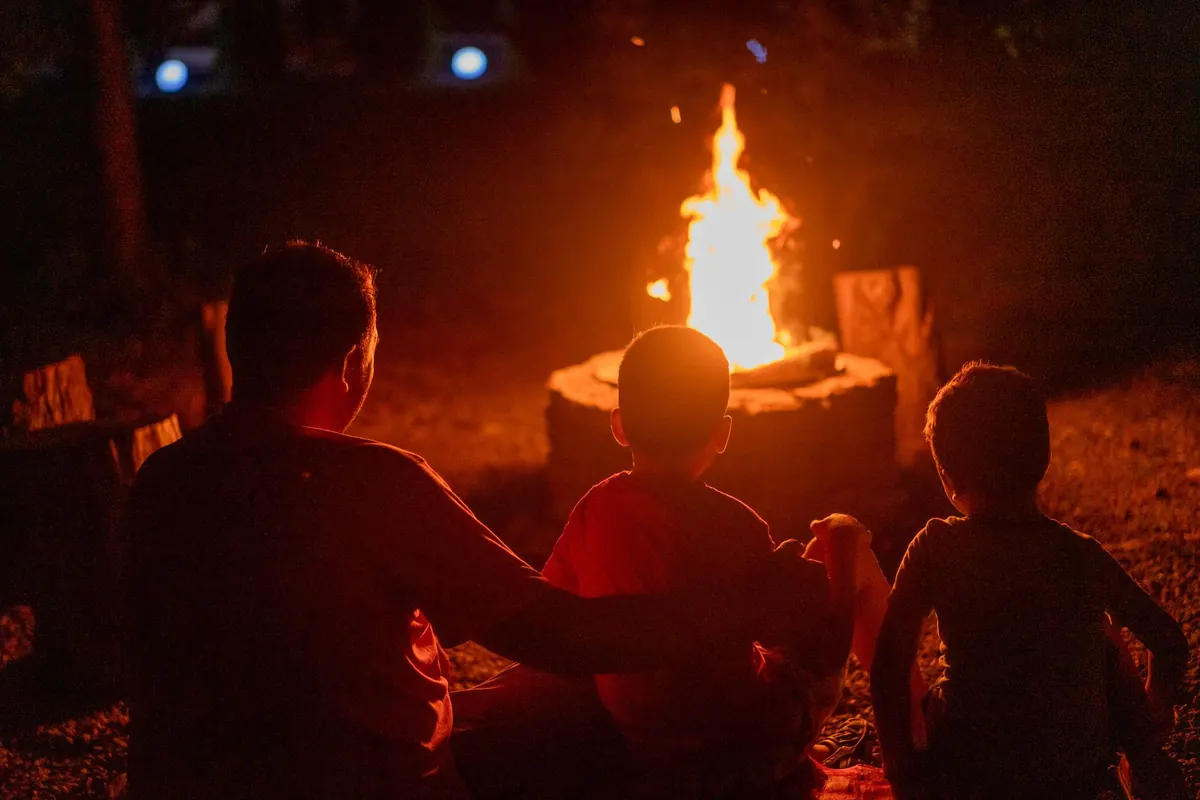
At a campfire, the audience is close enough to hear the breath before a line and the wood settling under the flame. That intimacy changes the singer's job. You are not projecting into a dark hall; you are placing a story into a small circle. The fire itself supplies rhythm—pops, hisses, a log shifting—and the singer can use those gaps instead of filling them. A campfire ballad often wants a slightly slower tempo than a stage version, not because it is sadder, but because there is time to let an image land. A line like "Oh, bury me not on the lone prairie" does not need help; it needs space.
Campfire audiences also tend to stay longer. People are not checking their watches or waiting for the next act. That means a singer can include more verses, repeat a chorus, or add a verse that names a local creek or a nearby town. The extra verse may not be in the printed broadside, but it belongs to the evening. "Red River Valley" can be stretched with a repeat of the first verse at the end; "The Streets of Laredo" can afford the full walk from the cowboy's confession to the funeral procession. The fire rewards patience. It also rewards participation. A chorus that is easy to catch will come back from the circle, sometimes ragged and better for it.
The campfire version should not be sloppy, though. The common mistake is to confuse intimacy with carelessness. A quiet setting exposes a forgotten line and a wandering guitar. If anything, the campfire asks for a firmer internal pulse, because there is no stage lighting or sound system to cover a stumble. The singer can be informal, but the story still needs a shape: a clear first verse, a chorus that returns, and an ending that does not trail off into "well, that's about it."
The Stage Makes Every Word Carry
On a stage, the same ballad has to compete with a different kind of noise: a room full of strangers, a microphone that magnifies every breath, a program that says you have twelve minutes. The audience may be attentive, but it is not yet inside the story. The singer has to build the circle instead of assuming it. That usually means a slightly quicker tempo, fewer verses, and a first line that does more work. A stage version of "Barbara Allen" might begin with the conflict already in view; a campfire version can afford a slower approach through the town and the fair.
Stage ballads also benefit from contrast. If every verse is sung at the same volume and intensity, the microphone flattens them. The stage rewards a whisper that is actually audible, a chorus that opens up, a final verse that comes back down. The audience needs to feel the story moving. In "Sam Bass," for example, the chorus can carry the crowd, while the verses stay close and reportorial. In a sentimental piece like "Home on the Range," the stage version often works best when it is not pushed too hard; the song is already familiar, and over-singing it can turn nostalgia into a performance of nostalgia.
The stage also makes introductions matter. Around a fire, a spoken introduction can ramble; people are comfortable. On stage, a long setup can lose the room before the first chord. A single sentence—who the song is about, where it comes from, why it matters—is usually enough. Then let the ballad do its work. The stage does not require a different truth, only a faster route to it.
What Changes and What Does Not
It helps to separate the adjustable parts of a ballad from the load-bearing parts. The adjustable parts are practical: tempo, verse count, dynamics, instrumentation, introductions, and how much the singer invites the audience in. The load-bearing parts are the story, the central image, the melody that carries the refrain, and the emotional truth that made the song worth learning in the first place. A stage version can be shorter and a campfire version can be longer, but both should still be recognizable as the same song.
- Tempo: The campfire version often sits a little slower; the stage version needs forward motion.
- Verse count: The fire can take extra verses; the stage usually cuts to the essential scenes.
- Dynamics: The fire can stay quiet for a long time; the stage needs audible contrast.
- Introductions: The fire can tell a story before the story; the stage should be brief.
- Participation: The fire invites choruses and harmony; the stage may save that for one strong moment.
What should not change is the singer's respect for the song. Do not add a stage version that is all punchline and no ballad, and do not let a campfire version become so loose that the narrative disappears. The setting is a filter, not an excuse.
Preparing Two Versions
The most practical way to handle both settings is to prepare two versions on purpose, then keep them separate in your mind. Start with the full ballad. Write out every verse you know. Then mark the verses that carry the story: the meeting, the trouble, the turn, the ending. Those are the ones the stage version will keep. The campfire version can keep them too, plus the atmospheric verses, the local verses, and the repeats.
- Choose the core. Decide which three or four verses a stranger must hear to understand the song.
- Build the stage version. Put the core in order, set a tempo that moves, and find one dynamic change.
- Build the campfire version. Add back the verses that deepen the scene, and leave room for a chorus or a pause.
- Test the transitions. Know how you will get from the verse to the chorus without a microphone or with one.
- Keep a short note. Write "fire: slow, extra verse 4" or "stage: cut verse 2, start chorus after verse 3" so you do not mix them by accident.
For example, a singer might perform "The Streets of Laredo" at a fire with five verses and a long pause before the final refrain. On stage, the same singer might use three verses, start a little quicker, and let the chorus do the emotional work. Both are valid. The fire version lets the listener lean in; the stage version lets the listener follow.
Reading the Room
No two fires and no two stages are identical. A campfire with ten tired riders is not the same as a campfire with a family and a guitar. A listening room is not the same as a noisy bar with a stage in the corner. The singer has to read the room and adjust within the version. At a fire, if the circle is quiet, slow down and take the extra verse. If people are talking and passing bottles, tighten the song and go for the chorus. On stage, if the room is attentive, you can risk the quieter verse; if it is restless, get to the refrain sooner and save the detail for the next song.
The best rule is simple: the fire rewards patience, and the stage rewards clarity. That does not mean the campfire version is formless or the stage version is shallow. It means each setting has its own economy. The fire's economy is time; the stage's economy is attention.
Neither the fire nor the footlights make a ballad truer. They make it more itself in one direction or another.
So learn the ballad whole, then learn what each room asks you to leave in and what it asks you to leave out. A western ballad is sturdy enough to survive both. The singer's job is to make the change on purpose, so that the song still sounds like the same story—just told to the people who are actually there.
Photo: Sorbyphoto / Pixabay